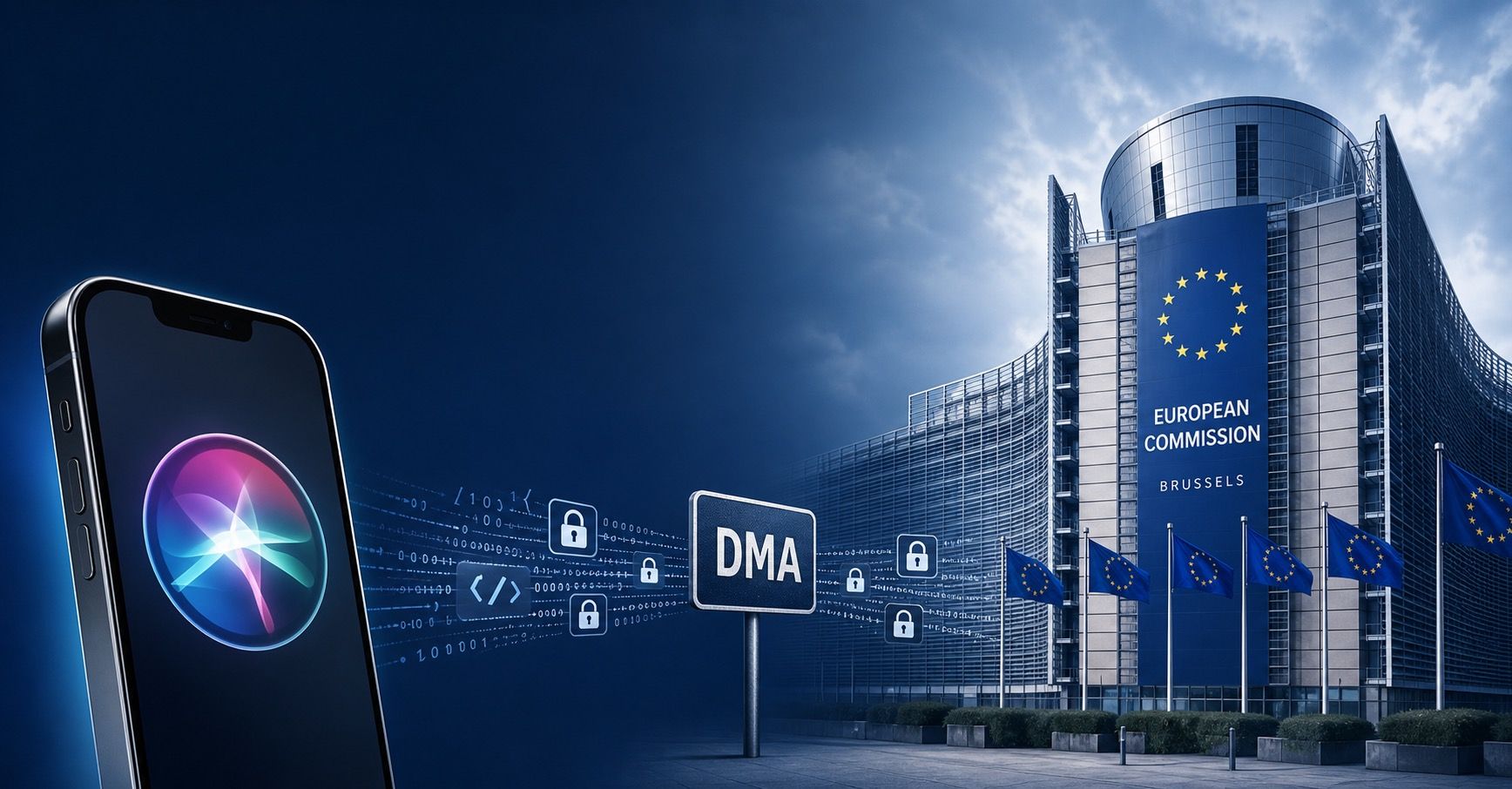
🔹 As an EU affairs specialist and a tech enthusiast, I was struck this week by the latest episode in the Commission–Apple contention.
Alongside the beta release of iOS 27, we have learned that Siri AI won't ship anytime soon in the EU, as both sides disagree about opening virtual-assistant access under the DMA — while preserving privacy and security.
I have nothing against the DMA's principle of opening up a mobile operating system. But countering oligopolistic effects through openness is not the alpha and omega of consumer protection. It must be weighed against other imperatives, notably, in this case, the consumer's privacy and security.
⚖️ The flaw: the Commission never seriously articulated the DMA's openness obligations with the ePrivacy Directive (Art. 5(3)) which essentially guarantees the user's right to receive full and comprehensive information about the risks that may arise from third-party providers accessing sensitive and confidential information on their smartphone. With no lex specialis to say which norm prevails, it treated the absence of a conflict rule as the absence of a conflict, which is a blatant paralogism.
Beyond the gatekeeper's interest lies an implacable reality: a recurring tension between data privacy and security, and the openness needed to mitigate the oligopolistic effects inherent in a world built on two mobile operating systems. So treating a warning that serves the user, but also, incidentally, the gatekeeper as well, as being deceptive by default, is a construction that can and should be contested. Its truthfulness carries no weight, though it could often be verified technically; the issue is that only its supposed dissuasive effect counts, in the eyes of the Commission.
🧭 A principle of openness must not harden into a dogma. The moment it can no longer accommodate a legitimate, even verifiable, security or privacy concern, it begins to erode its own legitimacy in the view of the consumer, which is a striking paradox. As with ePrivacy, the refusal to better articulate and balance those two pillars of consumer protection was itself the error. That is what this case reveals.
Originally published on LinkedIn, 10 June 2026.